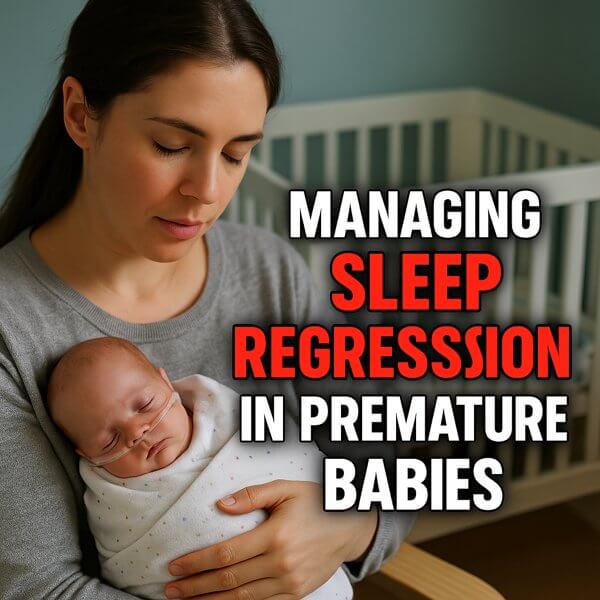
Many parents notice sudden sleep disruptions around the seventh month, even if their baby slept well before.
Parents often call this phase the 7-month sleep regression.
It is a normal and temporary part of infant development.
What Is the 7-Month Sleep Regression?
Sleep regression at seven months is a phase where previously stable sleep suddenly becomes irregular.
During this time, babies may wake more frequently at night or struggle with naps.
This regression is closely linked to rapid physical, cognitive, and emotional development.
Signs Your Baby Is Experiencing 7-Month Sleep Regression
Each child reacts differently, but many behaviors overlap.
- More disrupted nighttime sleep
- Sudden nap resistance
- Trouble settling at bedtime
- Early morning wake-ups
- Heightened need for comfort
A sudden shift in sleep without medical symptoms often points to regression.
Why Does Sleep Regression Happen at 7 Months?
Rapid Development
At this age, major developmental leaps occur.
These official source skills may include sitting independently, crawling, rocking on hands and knees, or pulling to stand.
Their brains continue practicing these skills, even during sleep.
Emotional Development
Around this age, separation anxiety may begin.
Night wakings may increase due to emotional needs.
Changing Sleep Needs
A baby’s sleep schedule often changes at this age.
Most babies transition to two or three naps per day with longer wake windows.
How Long Does the 7-Month Sleep Regression Last?
This regression will pass with time.
For most babies, it lasts between two and four weeks.
Consistency often speeds up recovery.
How Much Sleep Does a 7-Month-Old Need?
Total daily sleep needs remain relatively consistent.
- Overnight sleep: about 10–12 hours
- Daytime naps: roughly 2–3 hours
Adequate sleep reduces nighttime disruptions.
How to Survive the 7-Month Sleep Regression
Stick to a Predictable Routine
Consistency is more important than complexity.
Routine cues reduce bedtime resistance.
Optimize Wake Times
Longer wake periods are common at this age.
Encourage Daytime Practice
Allow your baby to practice new motor skills during the day.
Be Consistent With Night Wakings
Avoid introducing new sleep habits.
Final Thoughts on the 7-Month Sleep Regression
The 7-month sleep regression can be exhausting, but it is temporary.
It is a sign of healthy development, not a setback.
Better sleep is ahead for both you and your baby.